
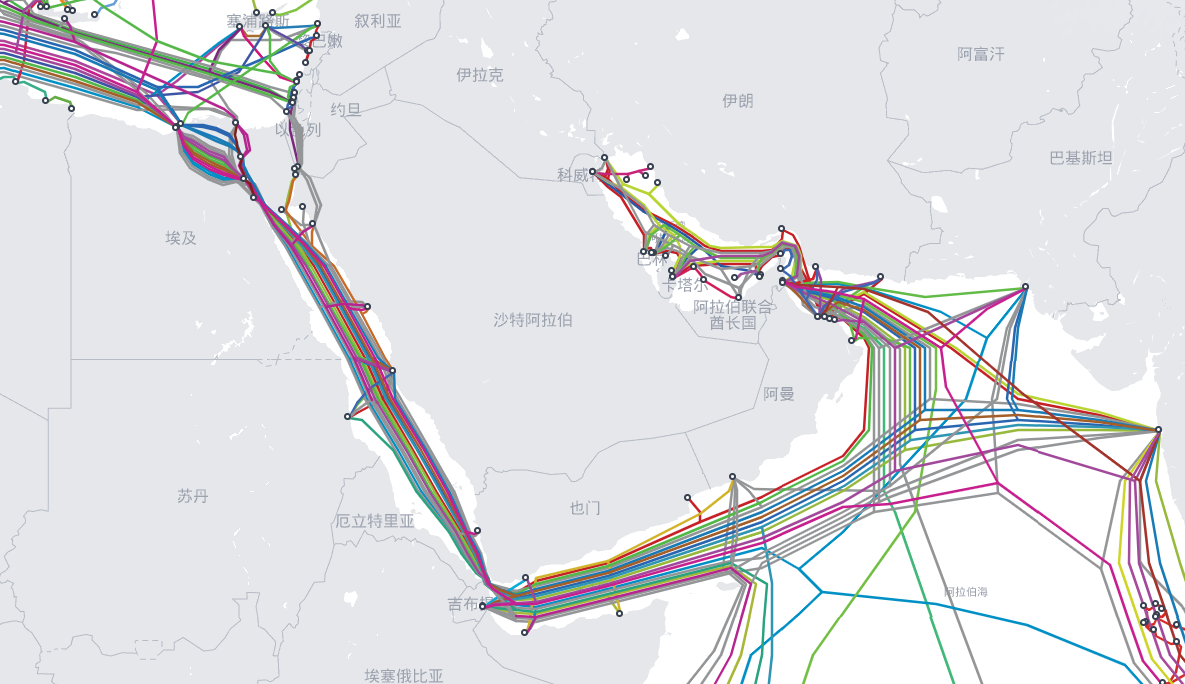
Since March 2026, triggered by the ongoing repercussions of the US-Israel joint airstrikes on Iran, the maritime shipping system in the Middle East—a global core hub for energy and trade—has plunged into unprecedented chaos. The dual blockades of key shipping lanes, the large-scale suspension of hub ports, and the skyrocketing freight rates on all routes have become the most prominent features of current Middle East maritime shipping. Multiple shipping segments including oil transportation and container shipping have suffered severe impacts, and the industry is facing the most severe geopolitical test in recent years. The turmoil has quickly spread to the global supply chain, bringing multiple challenges to the global trade and logistics industry.
I. Dual Blockades of Key Shipping Lanes, a Fatal Crisis for Shipping Lifelines
The core predicament of current Middle East maritime shipping is concentrated in two major key shipping lanes: the Strait of Hormuz and the Red Sea-Suez Canal corridor are under simultaneous pressure, forming a “dual blockade” pattern that has directly cut off the main outbound routes for Middle East cargo, becoming the core trigger of this round of maritime shipping crisis.
In the Strait of Hormuz, the Islamic Revolutionary Guard Corps of Iran officially announced on the evening of February 28 that, as a countermeasure in response to the US-Israel joint airstrikes, all ships are prohibited from passing through the strait, and forced passage will be regarded as a hostile target. On March 1, an unauthorized oil tanker was hit while attempting to pass, an incident that has further exacerbated the risk aversion of global shipping enterprises. According to real-time data from the International Oil Tanker Traffic Monitoring System, the sailing speed of oil tankers in the waters around the Strait of Hormuz has generally dropped to zero, a large number of ships have been forced to anchor for shelter in the open sea of the Gulf of Oman, and the waterway has come to a complete standstill. As a vital passage for crude oil exports from Middle East oil-producing countries, the Strait of Hormuz handles about 20% of the world’s seaborne oil trade. Its blockade has directly hindered the world’s main energy transportation route and caused a phased blockage in the circulation of the global crude oil trade.
For the Red Sea-Suez Canal corridor, the Houthi armed forces in Yemen announced on February 28 the resumption of missile and drone attacks on Red Sea shipping and Israeli-related targets, marking the official breakdown of the previous ceasefire agreement reached with the US side. Adopting an asymmetric tactic of “Al-Quds-4 cruise missiles, drone swarms, and maritime speedboats”, the Houthi armed forces prioritize attacking ships associated with the US and Israel, forcing a large number of global merchant ships to abandon the Red Sea route and detour around the Cape of Good Hope in Africa instead. The route adjustment has directly extended the voyage of Eurasian routes by 7 to 10 days, significantly reduced global shipping capacity, and the traffic volume of the Suez Canal has plummeted by 50% compared with the previous period, further exacerbating the global shipping congestion and pushing up the route operation costs.
II. Large-Scale Suspension of Core Hub Ports, the Middle East Shipping System on the Brink of Paralysis
Affected by the dual impacts of the blockades of key shipping lanes and the continuous escalation of regional security risks, major core hub ports in the Middle East have been largely suspended, the entire Middle East shipping system is on the verge of a “partial paralysis”, the cargo import and export links have been broken, and the backlog problem has become severe.
Several key ports have issued official suspension announcements: Jebel Ali Port in Dubai, the largest container port in the Middle East and among the top ten in the world, has officially announced the suspension of operations. As a core transshipment hub for Eurasian routes and Middle East-Asia routes, its suspension has directly led to a complete breakdown of transshipment links for relevant routes and a large backlog of cargo; all ports in Iran, including Bandar Abbas and Imam Khomeini Port, have been fully closed due to the blockade of the Strait of Hormuz, and no ships dare to call at present; ports in Bahrain and Duqm in Oman have been urgently suspended due to the impact of surrounding attacks; Eilat Port, Israel’s only port on the Red Sea, has been closed for a long time with no shipping operations carried out.
In addition, several regions have essentially fallen into a state of shipping suspension: although no official suspension announcements have been issued, all oil tankers and container ships have stopped sailing, turned around or detoured in the entire Strait of Hormuz due to Iran’s official blockade policy; in the entire waters of the Persian Gulf, major global shipping companies such as Maersk and Mediterranean Shipping Company (MSC) have completely avoided the area due to the US Navy’s warning of “being unable to guarantee navigation safety”; in the Red Sea/Gulf of Aden waters, leading shipping giants including Maersk and MSC have announced another suspension of shipping, and all relevant routes have been adjusted to detour around the Cape of Good Hope, resulting in an almost complete halt to shipping activities in the region.
The collective suspension of core ports has directly exacerbated the cargo backlog in the Middle East, completely broken the import and export links, and left a large number of containers and oil tankers stranded in the open sea outside the ports. This has not only worsened the logistics circulation predicament in the Middle East itself but also spread further to the world, triggering large-scale delays in the global supply chain.
III. A Comprehensive Surge in Freight Rates and Operation Costs, Severe Pressure on All Shipping Segments
The continuous escalation of geopolitical conflicts has directly driven a sharp surge in freight rates and operation costs for shipping routes related to the Middle East. The increase in freight rates in the oil transportation market is particularly significant, and other segments such as container shipping, LNG (liquefied natural gas) and LPG (liquefied petroleum gas) shipping have also been affected simultaneously, leading to a sharp rise in the overall operational pressure of the industry.
(I) Oil Transportation Market: Freight Rates Hit a Six-Year High, Tight Supply and Demand Pattern Continues to Worsen
Before the escalation of US-Iran conflicts, the freight rates of global Very Large Crude Carriers (VLCCs) had already shown a rapid upward trend. The daily charter rate for the Middle East to China route had exceeded 170,000 US dollars, a sharp increase of 200% compared with the beginning of the year. As of February 26, the Time Charter Equivalent (TCE) for the VLCC TD3C route of the Baltic Dirty Tanker Index (BDTI) stood at 209,000 US dollars per day, hitting a new high since April 2020.
The blockade of the Strait of Hormuz has further pushed up oil transportation freight rates, and coupled with the resonance of multiple factors, the high prosperity of the oil transportation industry has continued to climb. On the one hand, the global crude oil supply trend is positive, and the crude oil shipment volume of Middle East oil-producing countries such as Saudi Arabia, Iraq and Kuwait increased significantly in February. Among them, Saudi Arabia’s crude oil shipment volume in the first 24 days of February soared to 7.3 million barrels per day, reaching the highest level since April 2023, and the global demand for oil tanker capacity continues to grow; on the other hand, the supply of capacity shows a structural shortage. The net growth rate of the global VLCC fleet in 2026 is only 2.1%-2.6%, at a historical low, a large number of old ships are facing dismantling, and the new capacity is difficult to make up for the market gap. In addition, South Korea’s Sinokor Merchant Marine has massively absorbed VLCC capacity through purchases and charters, increasing its controlled capacity from 26 to 118 ships, accounting for 13.0% of the global total VLCC capacity. This move has further exacerbated the tight supply of market capacity and become an important factor driving the continuous rise of oil transportation freight rates.
(II) Container Shipping and Other Segments: A Sharp Surge in Freight Rates After a Decline, Dual Rises in Risk Premium and Operation Costs
In the container shipping market, the container cargo volume in the Middle East accounts for about 5% of the world’s total, and the container throughput inside the Strait of Hormuz accounts for 3% of the world’s total, with an average ship size of about 6,600 TEUs (20-foot equivalent units) in the region. Affected by geopolitical conflicts, the Middle East route has become the most directly impacted route. Leading liner companies such as Maersk, CMA CGM and Hapag-Lloyd have all suspended port calls and strait passage for the Persian Gulf route, suspended booking services for some Middle East ports, and the ships that have set sail have made emergency diversions or returned. In terms of freight rates, supported by the geopolitical risk premium, the freight rates of European routes, India-Pakistan routes and Middle East routes have all shown a trend of rising after a decline in the short term. Among them, the freight rate of the Persian Gulf route soared by more than 300% in a single day, leading to a substantial increase in the transportation costs of container shipping enterprises and shippers.
Among other segments, the dry bulk shipping market has been relatively less affected directly, but the freight rates of LNG and LPG ships have also shown a follow-up upward trend due to the high proportion of shipments from the Middle East in the global market. At the same time, due to the escalation of regional security risks, international insurance institutions have sharply raised the war risk premium for Middle East routes, even cancelled war insurance in some high-risk areas, and fully restarted the war risk surcharge. This change has further increased the operation costs of shipping enterprises, making the already under pressure Middle East shipping market even worse.
IV. The Global Industrial Chain Impacted, Cautious Industry Outlook for the Future
The current turmoil in Middle East maritime shipping has evolved from a regional shipping crisis to a systemic crisis in the global shipping and energy sectors, and its impact is continuing to spread to various regions and industries around the world. At the regional level, the suspension of port operations in the Middle East has led to a large backlog of cargo and severe voyage delays, a large number of Middle East cargo sources have been forced to transfer to other ports, and core Asian ports such as Shanghai Port in China have become important alternative transshipment hubs, with a sharp increase in transshipment volume and container volume; at the global level, Asian energy-importing countries such as China and India are facing the expectation of tight crude oil supply, the prices of crude oil and refined oil in the international market have risen simultaneously, the overall cost of the global supply chain has increased substantially, further impacting the global inflation level and the recovery process of the manufacturing industry.
In the capital market, the shipping sector has been the first to respond to the current changes in Middle East maritime shipping. The stock prices of shipping-related listed companies on the A-share and Hong Kong stock markets have performed brightly, among which oil transportation enterprises such as China Merchants Energy Shipping and COSCO Shipping Energy have seen particularly significant gains after the holiday, fully reflecting the market’s high recognition of the high prosperity of the oil transportation industry. Professional industry institutions judge that the tight supply and demand pattern of the compliant VLCC market in 2026 is expected to continue, the central level of freight rates is expected to be higher than that in 2025, and the high prosperity of the oil transportation market has strong sustainability.
In terms of future development, the improvement of the current Middle East maritime shipping situation is highly dependent on the mitigation of conflicts in the Middle East. However, at present, all parties have not made a clear ceasefire statement. The US and Israeli military forces stated that relevant military operations will continue to advance, Iran strongly emphasized that “Iran decides the end time of the war”, and the attacks by the Yemeni Houthi armed forces will also continue. The security risks of Middle East maritime shipping cannot be effectively mitigated in the short term. The industry generally suggests that global shipping enterprises and shippers should avoid arranging direct cargo calls at Persian Gulf ports in the short term and prioritize transshipment through third-party safe ports such as Oman. At the same time, they should closely track the route adjustment dynamics of major shipping companies and changes in the war insurance policies of insurance institutions, lock in shipping resources in advance, and minimize the operational risks caused by geopolitical conflicts.
V. Seeking Opportunities in Crisis, Guangzhou Trust Sailing International Transportation Co, Ltd. Escorts Your Business
Against the backdrop of the ongoing turmoil in the Middle East maritime shipping situation and the restructuring of the global supply chain, shippers and foreign trade enterprises are facing unprecedented challenges in their logistics and transportation planning. How to avoid shipping risks, ensure the timeliness of cargo transportation and control logistics costs have become the core demands of enterprises at present.
As a professional service provider deeply engaged in the international logistics field, Guangzhou Trust Sailing International Transportation Co, Ltd. has provided safe, efficient and flexible logistics solutions for a large number of customers in this Middle East maritime shipping crisis by virtue of its rich experience in the Middle East routes accumulated over the years, its improved global logistics network layout and professional risk research and judgment capabilities. In response to the current situation of blockades of key Middle East shipping lanes and port suspensions, the company set up a professional emergency team at the first time, tracking the global shipping companies’ route adjustments, port operation status and geopolitical changes in real time, and formulating accurate cargo transshipment plans for customers, prioritizing transshipment through third-party safe ports such as Oman to effectively avoid shipping risks in high-risk areas such as the Persian Gulf and the Red Sea; at the same time, relying on in-depth cooperation resources with leading shipping companies such as Maersk and CMA CGM for a long time, the company can lock in scarce shipping capacity for customers in advance, ensure the shipment timeliness of cargo, and avoid cargo backlog caused by capacity shortage.
In the market environment of skyrocketing freight rates and high operation costs, Guangzhou Trust Sailing International Transportation Co, Ltd. has always adhered to the customer-centric principle, and strived for favorable freight rate policies for customers by virtue of its large-scale resource integration capabilities, effectively controlling customers’ logistics and transportation costs; in addition, the company also provides one-stop international logistics services covering the entire process of sea freight booking, customs declaration and inspection, cargo transshipment, warehousing and distribution, allowing customers to avoid the trouble of cumbersome logistics procedures in a complex market environment and realize the safe and efficient transportation of cargo.
Facing the complex and changeable global geopolitical and shipping market environment, Guangzhou Trust Sailing International Transportation Co, Ltd. will continue to give play to its professional and resource advantages, and with professional services, rapid response and flexible solutions, escort a large number of foreign trade enterprises and shippers, help enterprises seek new opportunities in the crisis, and steadily promote the development of global trade business.